
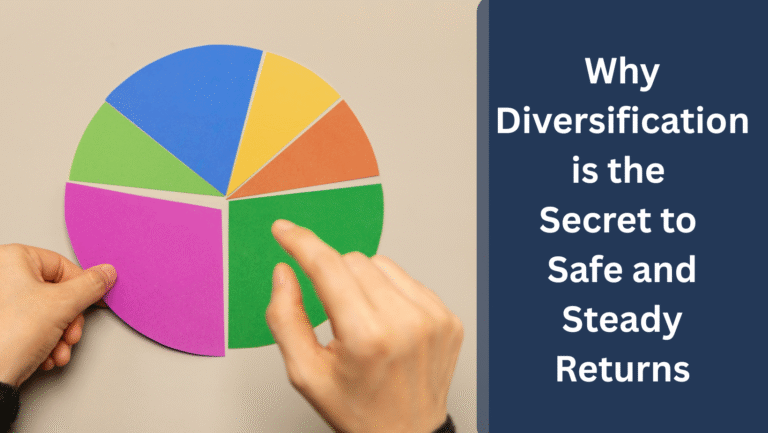
Why Diversification is the Secret to Safe and Steady Returns
When it comes to investing, most people have one simple goal — grow their money safely.
But the mistake many investors make is putting all their money into one place — only stocks, only real estate, or only fixed deposits.
The truth is, no single investment option performs well all the time.
That’s why successful investors follow one timeless rule — diversify.
Let’s understand what diversification means, why it matters, and how you can apply it to your own portfolio.
What Is Diversification?
Diversification simply means spreading your investments across different asset classes — like mutual funds, real estate, gold, fixed deposits, and even insurance-based savings plans.
By doing this, you reduce your overall risk.
If one investment performs poorly, others can balance it out — ensuring steady, long-term growth.
Think of it as not putting all your eggs in one basket.
Why Diversification Matters
-
Reduces Risk
Every investment carries some level of risk. When your portfolio is spread out, a loss in one area doesn’t impact your entire capital. -
Ensures More Consistent Returns
Different assets react differently to market conditions.
When the stock market goes down, gold prices often rise — keeping your overall returns balanced. -
Protects Against Inflation
Assets like real estate and equities often grow faster than inflation, helping your wealth maintain real value over time. -
Improves Long-Term Growth
With the right mix, diversification can help you enjoy stable and compounding returns for years — without unnecessary stress.
How to Diversify Your Portfolio in 2025
If you’re an investor in India looking for stability and long-term growth, here’s a simple way to structure your portfolio:
-
Equity Mutual Funds (30–40%) – For higher long-term growth potential
-
Debt Funds or Fixed Deposits (20–30%) – For stability and fixed income
-
Gold or Digital Gold (10–15%) – For inflation protection
-
Real Estate (10–20%) – For tangible, long-term appreciation
-
Insurance / Retirement Plans (5–10%) – For future security
These ratios can be adjusted based on your age, goals, and risk tolerance.
If you’re nearing retirement, you might prefer safer options like FDs and debt funds.
If you’re in your 30s or 40s, mutual funds and equities can deliver better long-term returns.
Common Mistakes to Avoid
-
Over-Diversifying: Too many investments can become hard to track and manage.
-
Ignoring Portfolio Review: Review your investments every 6–12 months to rebalance.
-
Chasing Trends: Don’t invest based on hype or short-term news; focus on long-term stability.
Final Thoughts
Diversification isn’t about playing it safe — it’s about being smart.
It allows you to grow your wealth steadily while protecting yourself from market surprises.
At Phoenix Consultancy, we help you design personalized investment plans based on your goals, risk profile, and financial timeline — so your money works harder, safely.